Key facts as of November 19, 2026
- Short answer: on a clear, dry day the drive from Denver to Breckenridge is mostly a wide interstate and not scary. In a snowstorm, on steep grades or in weekend ski traffic, it can be stressful for drivers who are new to mountain roads.
- The route: about 104 miles from Denver International Airport (DEN): I-70 west through the Eisenhower-Johnson Memorial Tunnel to Exit 203 at Frisco, then about 10 miles south on Highway 9. Plan on roughly two hours in good conditions.
- High point: the tunnel’s west portal sits at 11,158 feet, the highest point on the U.S. Interstate Highway System. Breckenridge is at about 9,600 feet.
- Traction law: in force on I-70 between Dotsero and Morrison from Sept. 1 to May 31. When it is activated, you need qualifying tires with at least 3/16-inch tread on a 4WD/AWD vehicle, or chains or an approved traction device.
- This weekend: forecasters expect a colder storm Friday into Saturday (Nov. 20-21), with about 2-3 inches for Breckenridge.
“Is the drive from Denver to Breckenridge scary?” is one of the most common questions skiers ask before a Colorado trip, and it is a fair one. Getting there means crossing the Continental Divide in winter. Here is an honest look at the drive from DIA to Breckenridge: the tricky spots, what the law requires, what is happening on I-70 this week and how to make the trip easy.
Is the drive from Denver to Breckenridge scary? The honest answer
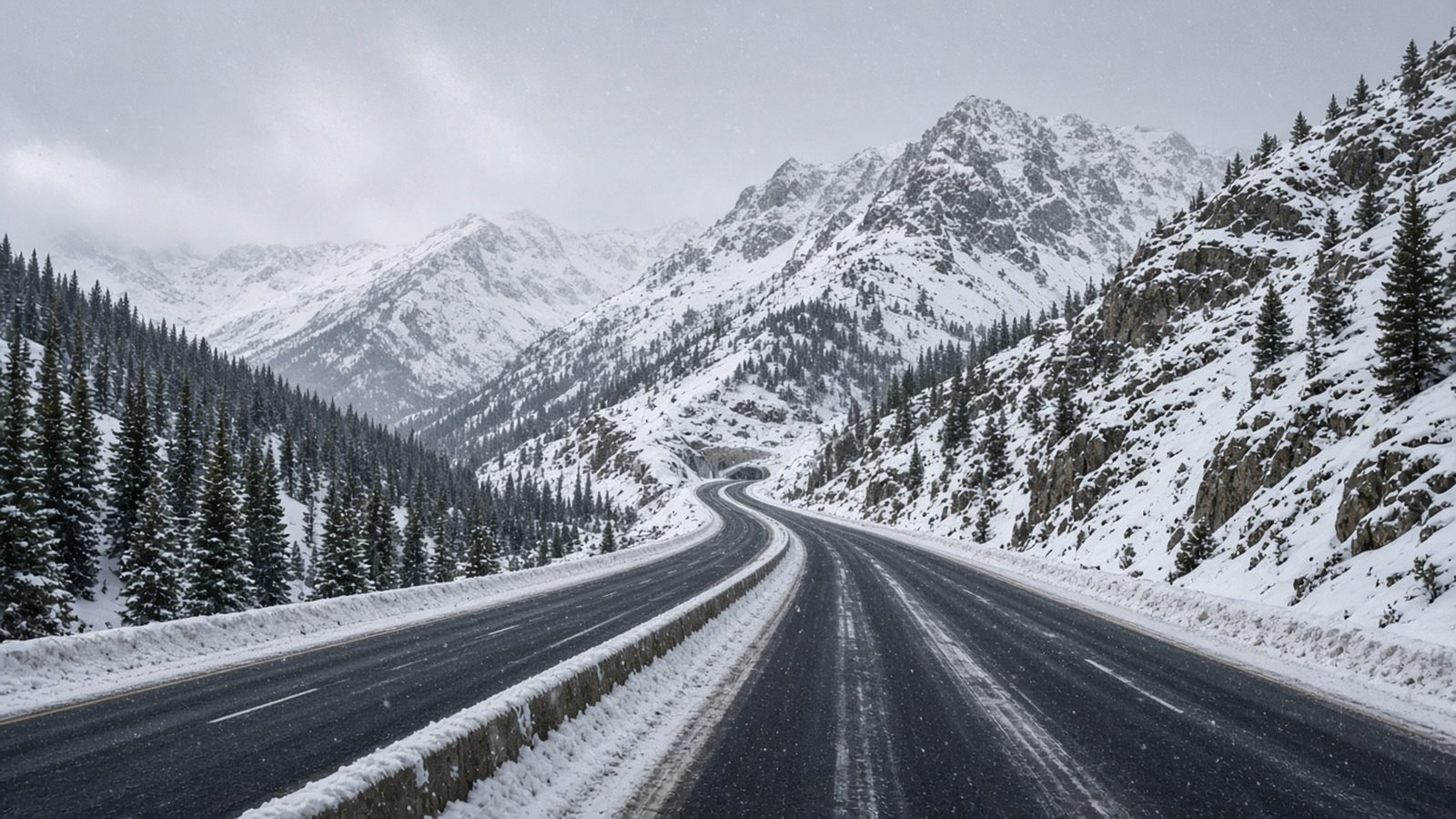
Most of the trip is a divided interstate that CDOT plows around the clock during storms. On a sunny, dry day it is more scenic than scary: you pass Idaho Springs and Georgetown, cross under the Divide and drop into Summit County with Dillon Reservoir below.
The drive gets harder for three reasons:
- Snow and ice. Storms can turn the steep grades into slick, low-visibility climbs within an hour.
- Elevation and grades. The road climbs from the Mile High City to more than 11,000 feet at the tunnel, with long, steep descents.
- Traffic. Weekend ski traffic means stop-and-go on hills, where cars on worn tires get stuck.
The tricky spots between DEN and Breckenridge
Floyd Hill (east of Idaho Springs). This steep climb and sharp curve is under heavy construction. CDOT’s I-70 Floyd Hill Project will add a third westbound lane and ease the grade, with westbound I-70 in its new alignment by the end of 2027 and the whole project finished in 2029. For now, expect lane shifts and narrower lanes. CDOT has also said to expect overnight I-70 closures from mid-November through mid-December for bridge construction.
Georgetown Hill and the climb to the tunnel. West of Georgetown, the interstate climbs steadily toward the Eisenhower-Johnson Memorial Tunnel. Snow often falls harder up here than in town, and wind can blow it across the road.
The tunnel itself. The tunnel is dry and lit, but it has only two lanes and no shoulders. When traffic backs up into it, CDOT holds traffic at the entrance, usually for 15-20 minutes at a time. That happens most often eastbound on Sunday afternoons, and it can also happen after crashes or for avalanche control.
The descent into Summit County. West of the tunnel the road drops toward Silverthorne. Keep your speed down and use a lower gear instead of riding the brakes.
Highway 9 into Breckenridge. From Exit 203 at Frisco, it is about 10 miles to town on a well-traveled road. Watch for slick spots after dark.
Colorado’s traction law: what your car needs
The Passenger Vehicle Traction Law applies on I-70 between Dotsero and Morrison from Sept. 1 to May 31, and CDOT can activate it on any state highway during a storm. When the signs say the traction law is in effect, you need one of these:
- A 4WD or AWD vehicle with tires rated mountain-snowflake, M+S or all-weather, with at least 3/16-inch of tread; or
- Tire chains or an approved alternative traction device on two or more drive tires.
According to the Colorado State Patrol, there is no tire-only option for a two-wheel-drive car under the updated law. If the stricter chain law is called, every passenger vehicle needs chains or a traction device. CDOT lists the fine for not complying as $100 plus a $33 surcharge, rising to $500 plus a $157 surcharge if your car blocks a lane. The rules were updated in 2025 and 2026, so check the latest before you go.
This matters for visitors in rental cars. Before you leave the lot, check whether your car is 4WD or AWD and what tires it has.
What’s happening on I-70 this week
Early-season conditions are still building. Breckenridge opened for the 2026-27 season on Wednesday, Nov. 11, and more snow is on the way. OpenSnow’s Breckenridge forecast from Nov. 18 calls for a colder storm on Friday and into Saturday, with more chances for snow through the end of November. SnowBrains’ Colorado forecast puts Breckenridge at about 2-3 inches from Thursday through Sunday, with mountain temperatures mostly in the teens and low 20s on Saturday.
It is not a big storm, but fresh snow in cold temperatures can still make I-70 slick. If you drive on Saturday, be ready for the traction law and allow extra time.
Flying home? Starting in early November and running through February, CDOT may use sun glare detours on eastbound I-70 at Floyd Hill from sunrise to 8:30 a.m. on bright mornings, with delays of up to an hour. Build that into an early drive back to DEN.
Tips to make the drive less stressful
- Check COtrip before you leave. COtrip.org and the COtrip Planner app show closures, chain law alerts and road cameras.
- Avoid the peaks. Westbound traffic is heaviest on Friday afternoons and Saturday mornings. Eastbound traffic backs up on Sunday afternoons.
- Don’t drive into the heart of a storm. Waiting a few hours for plows to catch up is often faster than sitting in a closure.
- Keep momentum on climbs and give snowplows plenty of room.
- Pack for a delay: water, snacks, a blanket, a phone charger and a full tank of gas.
The easy way: a private car from DIA to Breckenridge
If you would rather watch the mountains than the road, let someone who drives I-70 every day do it for you. Mountain Star Transportation picks you up at Denver airport and takes you door to door in a 4×4 SUV or van with snow tires and a ski box all winter, so the traction law is covered. Child car seats are available on request, and grocery stops on the way can be arranged.
See our Denver airport to Breckenridge car service, or ride from DEN to Keystone with our Denver to Keystone car service. When you’re ready, check our rates or book your ride. We’ll handle the drive while you start your vacation.
FAQ: driving from Denver to Breckenridge in winter
Is the drive from Denver to Breckenridge dangerous in winter?
In good weather it is a routine interstate drive. During storms, the steep grades on I-70, ice and heavy traffic make it much harder, especially for drivers without mountain experience or a properly equipped car.
How long is the drive from Denver airport to Breckenridge?
About two hours for roughly 104 miles in clear conditions. Snow, closures or weekend ski traffic can add an hour or more.
Do I need 4WD to drive to Breckenridge?
Not always, but when the traction law is active, a 2WD car needs chains or an approved traction device. A 4WD or AWD vehicle complies with qualifying tires that have at least 3/16-inch of tread.
When is the best time to drive from Denver to Breckenridge?
Midweek and outside storms. Avoid westbound Friday afternoons and Saturday mornings, and eastbound Sunday afternoons.


